


Hotel Door Lock Systems in Egypt
Hotel door locks are no longer simply about replacing a traditional key. Nowadays modern hotels need to balance guest security, convenient room access, efficient front desk operations, staff access management, control over who can enter different areas, integration with other hotel systems, and long term reliability and maintenance.
Hotel door lock systems are particularly important for hotels and resorts because a single property may have hundreds of guest rooms, staff only areas, management offices, service areas, public facilities, back of house entrances, and multiple buildings or accommodation zones.
Traditional physical keys can become difficult to manage as the property grows, some of the problems that hotels might face because of traditional keys are:
- Lost keys
- Difficulty changing access permission
- No convenient way to manage different access levels
- Different key tracking
- Security concerns when keys are not returned
- Operational inconvenience for front desk and housekeeping teams
Modern hotel access can use technologies such as RFID/key cards, mobile credentials, bluetooth based access, PIN based access in certain applications, and hybrid access solutions.
RFID is particularly suitable for hotels because it provides contactless card based access, while mobile access can support a more digital guest experience.
In this article from Mokhtalef we will cover:
- The main hotel door lock options available
- How to choose a suitable system
- What resorts should consider
- What installation involves
- What affects hotel door lock cost in Egypt
- How door locks can connect with broader hotel security and management systems
Best Hotel Door Lock Solutions for Resorts
The best hotel door lock solutions for resorts combine RFID contactless keycards, mobile smartphone access, and cloud based management software.
Why Resorts Need More Than a Basic Door Lock
Guests may move between many areas like guest rooms, villas or chalets, restaurants, pools, spas, gyms, beach areas, parking facilities, elevators, and staff only areas so resorts can have more complicated access requirements.
The system therefore needs to consider different access zones, not just the guest room door.
Who can access this area, when they can access it, and what type of credential should they use? These are the questions a resort’s access system should answer.
Common Hotel Door Lock Technologies
RFID hotel door locks
Guests receive an RFID key card, the card is programmed with appropriate access permissions, guests use the card to unlock the door, and access is granted if the credentials are valid.
RFID cards still hold widespread appeal because they are familiar to guests, easy for front desk staff, contactless, suitable for many hotel environments, and they can be relatively straightforward to operate.
Mobile hotel access
Guests can use their smartphones as digital credentials depending on the system. Mobile access has multiple benefits such as contactless room entry, digital guest experience, potential integration with hotel applications, and reduced reliance on physical cards.
But hotels should consider guest adoption, phone compatibility, battery issues, connectivity/system requirements, and backup access methods.
Hybrid Systems
Hotels don’t necessarily have to choose between RFID and mobile access.
Implementing a hybrid system can provide:
- RFID cards for traditional access
- Mobile access for guests who prefer smartphones
- Backup options when a mobile credential cannot be used
Choosing a Hotel Door Lock for Different Property Types
The best door lock depends on the size and needs of the property. There is not one system that can be universally declared as the best.
Small Boutique Hotel
A small boutique hotel may prioritize simple management, reliability, and lower complexity. So a straightforward key card operation can be a good option for this hotel.
Large City Hotel
Large city hotels look for centralized management, integration, multiple access levels, and scalability. RFID cards are a good option.
Resorts
Resorts will be in the search for multiple access zones, outdoor environments, guest convenience, integration with other hotel systems, and more flexible credentials. So a hybrid system can be the way to go for resorts.
Luxury Hotel
Luxury hotels may place greater emphasis on guest experience, mobile access, design, seamless integration, and premium security features. So integrating mobile access can match the comfort and experience of luxury hotels.
The right hotel door lock depends on the hotel’s size, layout, guest experience goals, existing infrastructure, and security requirements.
What to Consider Before Choosing a Hotel Door Lock
Before choosing a hotel door lock hotels should consider:
- Number of rooms
- Number of doors
- New construction vs. retrofit
- Door type and condition
- Indoor vs. outdoor installation
- Preferred access method
- Staff access requirements
- Public area access
- Integration requirements
- Management software
- Emergency access
- Maintenance requirements
- Future expansion
Considering these aspects is a good first step toward choosing the right door lock for your hotel.
Why the Lock is Only One Part of the Solution
Purchasing individual locks is not necessarily the same as implementing a complete hotel access solution.
A lot of parts go into a complete system like door locks, RFID cards, card encoder, management software, access control readers, credentials, gateways/ controllers where applicable, integration with other hotel systems, installation, configuration, staff training, and maintenance.
Complete hotel lock configurations can include locks, cards, encoders, software, and optional integrations depending on the property’s requirements.
For resorts and larger properties, selecting the lock itself is only the first step. The next consideration is how the system will be installed and managed across the property.
Hotel Access Control Installation Guide
We’ll talk about the steps of installation, what professional installation requires, and why installation quality matters.
What Is Involved in Installing a Hotel Door Lock System?
Step 1: Site assessment
The installer needs to understand the number of doors, door types, door thickness, existing locks, electrical/network infrastructure where required, hotel layout, guest areas, staff areas, and access requirements.
Step 2: System selection
The installer determines the appropriate lock type, credential technology, management platform, required controllers/readers, and integration requirements.
Step 3: Door preparation
Existing doors may need to be prepared before electronic locks can be installed.
Depending on the selected hardware and existing door configuration, this can involve removing old locks, checking compatibility, preparing the door or mortise, and ensuring that the new hardware can operate correctly.
This is one reason why hotels should not assume that every electronic lock can be installed on every existing door without assessment.
Step 4: Hardware installation
The selected locks, readers, controllers, and related equipment can then be installed.
The installation needs to ensure that doors operate correctly and that the electronic components communicate properly with the rest of the system where applicable.
Step 5: Software configuration
The access management system needs to be configured according to the hotel’s operations.
This can include:
- Creating guest credentials
- Assigning room access
- Creating Staff permissions
- Setting access levels
- Managing lost credentials
- Configuring restricted areas
- Establishing administrative permissions
The goal is to make access management practical for the hotel’s front desk, security, and management teams.
Step 6: Testing
Before the system is put into normal operation, the installation should be tested.
Testing can include:
- Guest access
- Staff access
- Access permissions
- Lost card procedures
- Emergency access
- System communication
- Door operation
Testing is especially important because a problem with a hotel room lock can directly affect the guest experience.
Step 7: Staff training and handover
Hotel employees need to understand how to use and manage the system.
Front desk and security teams may need training on issuing credentials, replacing lost cards, changing permissions, and handling access problems.
A proper handover ensures that hotel employees are prepared to manage the system after installation.
New Hotel Installation vs. Replacing Existing Locks
The requirements can be different depending on whether the hotel is under construction or already operating.
New Hotel
New hotels have the advantage of being able to consider access control requirements during the design and construction stages.
This can make it easier to plan:
- Door hardware
- Infrastructure
- Network requirements
- Access control equipment
- Software
- System integration
Planning these elements early can help create a more cohesive system.
Existing Hotels
Replacing existing locks can require more attention to compatibility.
The project may need to consider:
- Existing door dimensions
- Current lock hardware
- Door condition
- Existing infrastructure
- Wiring requirements
- Compatibility with other systems
- Installation without unnecessarily disrupting hotel operations
A retrofit assessment can therefore be an important part of the project.
Why Professional Installation Matters
Hotel door locks are part of operational and security infrastructure. If installation or configuration is incorrect, the result can be more than a technical inconvenience.
Problems can include:
- Door alignment issues
- Access failures
- Incorrect permissions
- Communication problems
- Difficult maintenance
- Guest complaints
- Security weaknesses
Professional installation helps ensure that the hardware, software, access permissions, and other components are configured as one complete solution.
For hotels, this can also mean having a provider that can assist with site assessment, system design, installation, configuration, testing, training, and ongoing support.
Hotel Door Lock Cost in Egypt
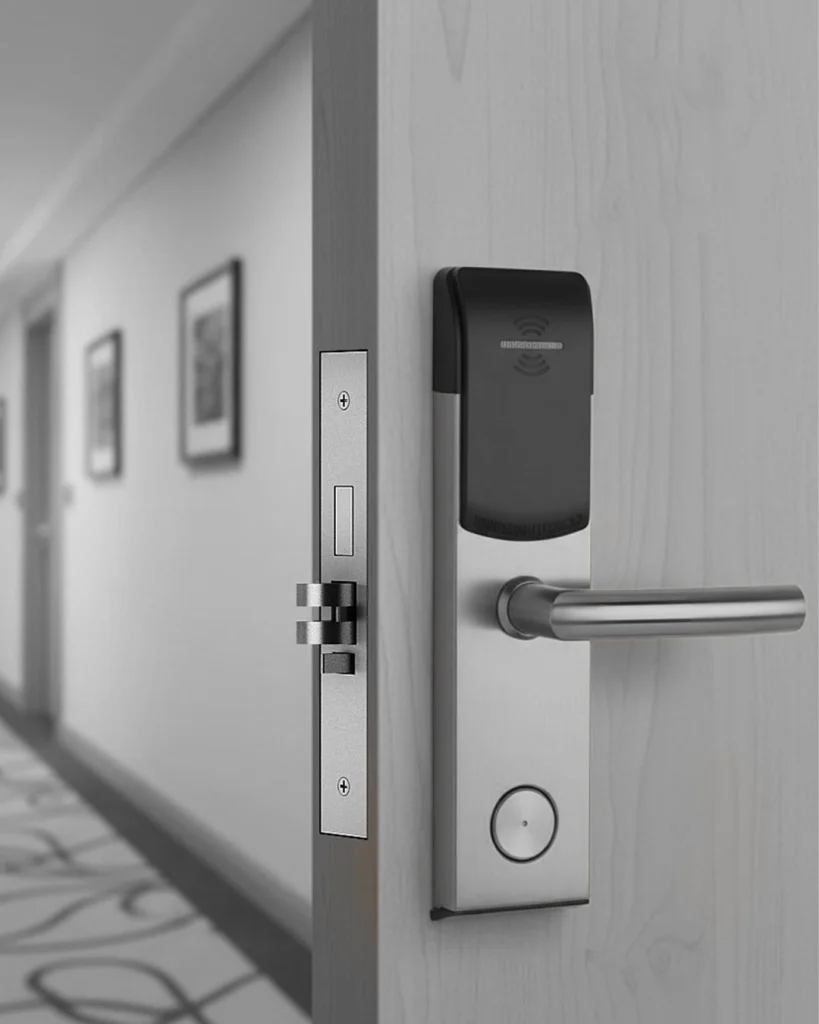
Hotel door lock costs in Egypt can vary considerably from one project to another. A small hotel replacing a limited number of locks will have very different requirements from a large resort implementing an integrated access system across hundreds of rooms and multiple facilities.
For this reason, hotels should be careful about comparing systems based only on the price of an individual lock.
The complete project cost can depend on the hardware, technology, software, installation, integration, number of access points, and existing infrastructure.
What Determines Hotel Door Lock Cost?
1- Number of Doors
A 20 room hotel and a 200 room hotel are completely different projects.
A project may include:
- Guest room doors
- Staff entrances
- Management offices
- Storage areas
- Restricted rooms
- Main entrances
- Other controlled access points
As the number of access points increases, so does the overall system scope.
2- Type of Lock
Different hotel door lock technologies and hardware specifications can have different costs.
A hotel may consider:
- RFID/Electronic locks
- Mobile enabled locks
- Hybrid systems
- Specialized hardware for particular environments
The right choice should be based on the property’s requirements rather than simply selecting the cheapest option.
3- Access Technology
The chosen credential technology can affect the overall system.
RFID systems may require cards and card encoding equipment, while mobile access may involve different software and technology requirements.
A hybrid system may require the infrastructure necessary to support both options.
4- Management Software
The software used to manage the system is another consideration.
Depending on the solution, hotel management may need capabilities for:
- Credential creation
- User management
- Access permissions
- Room Management
- Reporting
- Administrative control
The software becomes increasingly important as the number of rooms and users increases.
5- Additional Access Points
Hotel security often extends beyond guest rooms.
Additional access control equipment may be required for:
- Elevators
- Main entrances
- Staff areas
- Parking areas
- Restricted rooms
- Amenities
6- Installation
The final cost may also include professional services such as:
- Site assessment
- Door preparation
- Hardware installation
- Software configuration
- Testing
- Staff training
For an existing hotel, installation can be more complex if doors or existing infrastructure require modification.
7- Integration
Integration with existing hotel systems can affect the scope and price.
Potential integrations include:
- Property Management Systems
- Access control
- Guest Room Management Systems
- Other security solutions
8- Existing Infrastructure
A new hotel and an existing hotel can have very different installation requirements.
New properties can plan the necessary infrastructure beforehand, while existing hotels may require retrofittings or modifications.
Why You Should Not Compare Hotel Lock Prices by Hardware Alone
Hotel door locks are rarely identical.
A customized quotation can account for the property’s actual requirements, including the number of rooms, door types, access zones, technology preferences, existing infrastructure, integrations, and future expansion plans.
For a large resort or hotel, this approach can be much more useful than purchasing individual locks without considering how they will operate as part of the overall system.
Smart Hotel Security Systems
A hotel door lock system is an important security component, but it should not be treated as the entire hotel security system.
Hotel Door Locks as Part of an Integrated Security System
Depending on the property, hotel door access can work alongside:
- Access control systems
- CCTV and surveillance
- Guest Room Management Systems
- Fire alarm systems
- Intrusion detection
- Elevator access control
- Other building management or security systems
Instead of operating every system independently, integration can allow different technologies to support hotel operations more effectively.
Connecting Door Access With Guest Room Management
One of the most useful connections is between room access and guest room management.
For example, the guest’s access to a room can form part of the wider room management process, where technologies can help manage:
- Lighting
- HVAC
- Energy Consumption
- Room status
- Guest comfort
The door itself does not have to perform all of these functions. Instead it can be one component within a broader Guest Room Management System.
Access Control Beyond Guest Rooms
Hotels may need controlled access for:
- Staff entrances
- Management offices
- Storage rooms
- IT/server rooms
- Back of house areas
- Restricted facilities
- Elevators
This reinforces that hotel security needs different permission levels.
Why Integration Matters
Integration becomes increasingly valuable as the hotel grows.
A connected system can help provide:
- Centralized administration
- Better visibility
- Easier access management
- More efficient operations
- Better incident response
- Greater scalability
Instead of managing each component as an isolated technology, hotel management can create a more coordinated security environment.
This is particularly useful for larger hotels and resorts where the number of rooms, employees, access points, and security systems can make independent management increasingly difficult.
Building a Scalable Hotel Security System
Hotels should also think beyond their immediate requirements.
A property may eventually add:
- More rooms
- New buildings
- Additional facilities
- More access points
- Mobile access
- Additional security technologies
- New system integrations
Choosing a scalable platform can make future expansion easier and reduce the risk of replacing an entire system when the hotel’s requirements change.
How to Choose the Right Hotel Door Lock System in Egypt
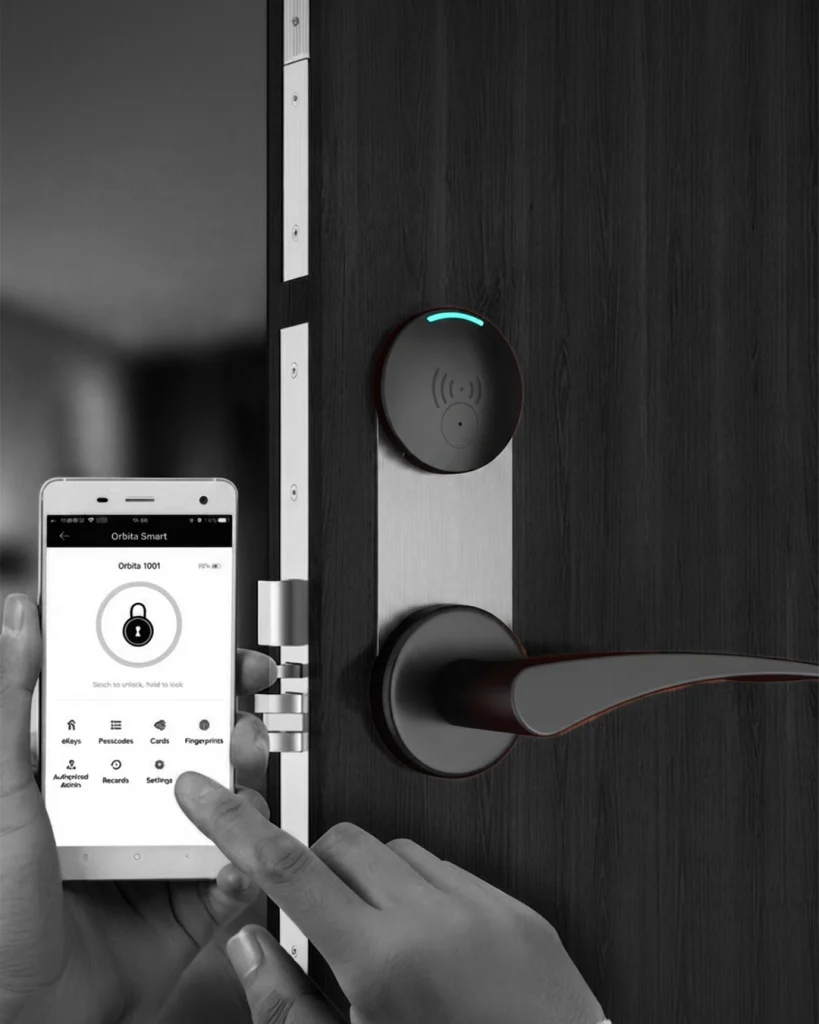
Choosing the right hotel door lock should depend on the hotel property’s requirements, not just the product.
Start With Your Hotel’s Requirements
Before choosing the hotel door lock, start with understanding your hotel’s requirements.
Before contacting a supplier, ask:
How many rooms do you have?
Is It a hotel, resort, serviced apartment, or other hospitality property?
Is the property new or existing?
What access method do guests prefer?
What areas need restricted access?
Do staff need different access levels?
What systems already exist?
Choose the Access Technology
RFID is suitable for properties that want familiar card based access.
Mobile access is suitable for properties that want to offer smartphone based entry and a more digital guest experience.
Hybrid access is suitable for properties that want to support both traditional cards and mobile credentials.
The best choice depends on the hotel’s guests, operations, infrastructures, and overall technology strategy.
Consider Integration Before Buying
Before buying the locks you should consider integration.
Ask whether the door locks will integrate with the hotel’s existing or planned:
- Property Management System
- Guest Room Management System
- Access control
- Elevator systems
- Security systems
This prevents the hotel from buying a lock that later becomes difficult to integrate.
Consider Installation and Support
A supplier should ideally be able to help with:
- Site assessment
- Product selection
- Installation
- Configuration
- Testing
- Training
- Maintenance
- Future upgrades
Think About the Total Cost of Ownership
The decision should consider initial investment, installation, operation, maintenance, and future expansion rather than simply the price of the lock alone.
Why Work With a Professional Hotel Security and Access Control Provider?
Implementing a hotel door lock is more than choosing a lock model. It requires understanding of the hotel’s layout, access requirements, existing infrastructure, and future security plans.
A professional provider can help turn those requirements into a complete system.
Site Specific System Design
A professional provider can evaluate property layout, door types, access requirements, existing infrastructures, security priorities and develop a system accordingly.
Integrating With Existing Systems
Hotels often already have several technologies in place.
A professional provider will help determine how the new door lock system can work alongside the existing systems.
Installation and Commissioning
Professional implementation can include:
- Hardware implementation
- System configuration
- Access permission setup
- Testing
- Integration
- Staff training
- Handover
This helps ensure that the system is ready for real hotel operations rather than simply installed at the hardware level.
Maintenance and Long Term Support
Hotel door locks are operational infrastructure.
A malfunctioning lock affects guests, front desk, housekeeping, security, and hotel reputation. Therefore, ongoing technical support matters.
Conclusion
Hotel door lock systems have become an important part of modern hotel security, providing more than basic room access. The right system can help hotels manage guest and staff access, improve convenience, support daily operations, and connect room access with wider security and hotel management systems.
For hotels and resorts in Egypt, choosing the right solution requires looking at the complete picture. Factors such as property size, numbers of doors, access technology, existing infrastructure, installation requirements, integration, and future expansion should all be considered before making a decision.
Working with an experienced provider can also ensure that the system is properly installed, integrated, configured, and supported over time.
If you’re looking for reliable hotel door lock systems in Egypt, Mokhtalef can help you select and implement a solution tailored to your property’s specific requirements.